


- Events
- Australia Day
- Bastille Day
- Burns Night
- Christmas
- Darts
- Day of the Dead
- Eurovision
- Festivals / Summer
- Halloween
- Halloween Accessories
- Nativity
- Oktoberfest
- Olympics
- Pride
- Red Nose Day
- School Play Costumes
- St Andrew's Day
- St Davids Day
- St Georges / England Supporters
- St Patricks Day
- Six Nations Rugby
- Stag Do
- Summer
- Thanksgiving
- VE Day
- World Book Day
- Adult World Book Day Costumes
- 4th July

- Themes
- Animals
- Around The World
- Book Characters
- British
- Chocolate Factory
- Cops & Robbers
- Cosplay
- DC
- Doctors and Nurses
- Fairytale
- Funny / Novelty
- Gangster
- Harry Potter
- Hawaiian / Summer
- Heroes and Villains
- Historical
- Army, Air Force & Naval
- Mexican Fiesta
- Pick Me Up
- Pink Cowgirl Hat Aesthetic
- Pirates
- Popstars and Celebrities
- Pre Historic
- Religious
- Sexy Costumes
- Sports
- Star Wars
- Steampunk
- Suits
- Tiger King
- TV, Film and Game
- Wild West
- Wizard of Oz
- Wizards & Witches
- 2000s
- 1990s
- 1980s
- 1960s 1970s
- 1950s
- 1940s
- 1920s


- Cosmetics
- Body Crayons
- Eye Liner
- Fabric Paint
- Face & Body Paint
- Face Jewels
- Fake Blood
- FX Fluids
- Glitter Fixatives
- Glitter Gel
- Glitter Shaker
- Hair Gel
- Hair Streaks
- Lipgloss
- Lipstick
- Lip Tattoos
- Loose Glitter
- Mascara
- Nail Polish
- Pigment Shakers
- Pro Face Paint Cake Pots
- Scars, Wounds, Prosthetics & FX

- Accessories
- Bandanas & Scarves
- Belts
- Braces
- Capes
- Elf Accessories
- Eye Lashes
- Facial Hair
- Feather Boas
- Glasses
- Gloves
- Guns, Weapons & Swords
- Hats & Headwear
- Hosiery
- Inflatables
- Jewellery
- Masks
- Masquerade Masks
- Pacifiers
- Props
- Sets & Kits
- Shoe Covers
- Shoes / Boots
- Sleeves
- Teeth
- Ties & Bowties
- Tutus & Underskirts
- Wigs
- Wings & Wands
- Other


- Gifts by Category
- Alternative
- Balloon Dog Sculptures
- Batteries
- Colouring Books
- Decorative Accessories
- Food & Drink
- Fragrance
- Gadgets & Tech
- Gift Sets
- Gifts for the Home
- Homeware
- Jewellery
- Keepsakes
- Knitting Wool
- Life
- Luggage & Suitcases
- Miscellaneous
- Ornaments
- Personalised Gifts
- Puzzle Books
- Puzzles
- Slippers
- Smoking
- Stationery
- Umbrellas
- Vehicle
- Wallets & Purses
- Warmies



-
- Australia Day
- Bastille Day
- Burns Night
- Christmas
- Darts
- Day of the Dead
- Eurovision
- Festivals / Summer
- Halloween
- Halloween Accessories
- Nativity
- Oktoberfest
- Olympics
- Pride
- Red Nose Day
- School Play Costumes
- St Andrew's Day
- St Davids Day
- St Georges / England Supporters
- St Patricks Day
- Six Nations Rugby
- Stag Do
- Summer
- Thanksgiving
- VE Day
- World Book Day
- Adult World Book Day Costumes
- 4th July
-
- Animals
- Around The World
- Book Characters
- British
- Chocolate Factory
- Cops & Robbers
- Cosplay
- DC
- Doctors and Nurses
- Fairytale
- Funny / Novelty
- Gangster
- Harry Potter
- Hawaiian / Summer
- Heroes and Villains
- Historical
- Army, Air Force & Naval
- Mexican Fiesta
- Pick Me Up
- Pink Cowgirl Hat Aesthetic
- Pirates
- Popstars and Celebrities
- Pre Historic
- Religious
- Sexy Costumes
- Sports
- Star Wars
- Steampunk
- Suits
- Tiger King
- TV, Film and Game
- Wild West
- Wizard of Oz
- Wizards & Witches
- 2000s
- 1990s
- 1980s
- 1960s 1970s
- 1950s
- 1940s
- 1920s
-
- Bandanas & Scarves
- Belts
- Braces
- Capes
- Elf Accessories
- Eye Lashes
- Facial Hair
- Feather Boas
- Glasses
- Gloves
- Guns, Weapons & Swords
- Hats & Headwear
- Hosiery
- Inflatables
- Jewellery
- Masks
- Masquerade Masks
- Pacifiers
- Props
- Sets & Kits
- Shoe Covers
- Shoes / Boots
- Sleeves
- Teeth
- Ties & Bowties
- Tutus & Underskirts
- Wigs
- Wings & Wands
- Other







-
- Alternative
- Balloon Dog Sculptures
- Batteries
- Colouring Books
- Decorative Accessories
- Food & Drink
- Fragrance
- Gadgets & Tech
- Gift Sets
- Gifts for the Home
- Homeware
- Jewellery
- Keepsakes
- Knitting Wool
- Life
- Luggage & Suitcases
- Miscellaneous
- Ornaments
- Personalised Gifts
- Puzzle Books
- Puzzles
- Slippers
- Smoking
- Stationery
- Umbrellas
- Vehicle
- Wallets & Purses
- Warmies

How Does A Generator Work?
by Darren Butler
Last updated: Oct 29, 2025
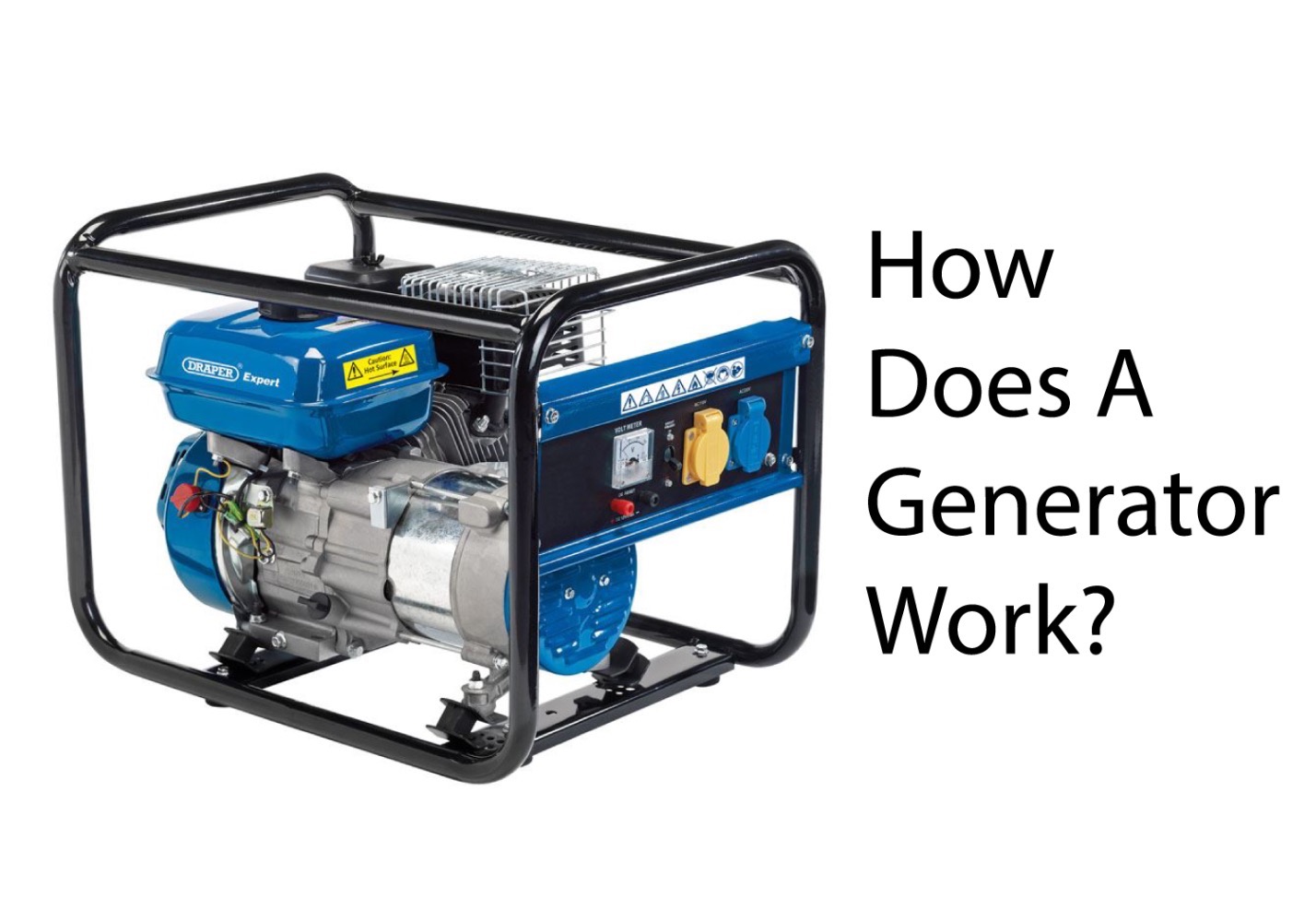
Electricity feels instant, but making it is a physical process rooted in simple physics. At its heart, a generator converts mechanical energy into electrical energy using electromagnetic induction—the same principle that creates current when a magnet moves past a wire. Whether bolted to a diesel engine on a building site or spun by a wind turbine offshore, the fundamentals are the same. This guide explains how generators work, what’s inside them, and why details like voltage, frequency and power factor matter. By the end, you’ll understand the moving parts and the safety basics to choose, use and look after one with confidence.
The core principle: electromagnetic induction
Michael Faraday showed that moving a magnetic field relative to a conductor induces a voltage. A generator exploits this by spinning a magnetic field near copper windings, or spinning the windings through a magnetic field. The changing magnetic flux “pushes” electrons along the wire, creating an alternating current (AC). The faster the change, the higher the voltage; the stronger the magnet, the greater the potential. That’s the essence: convert rotation into electricity.
What’s inside a generator
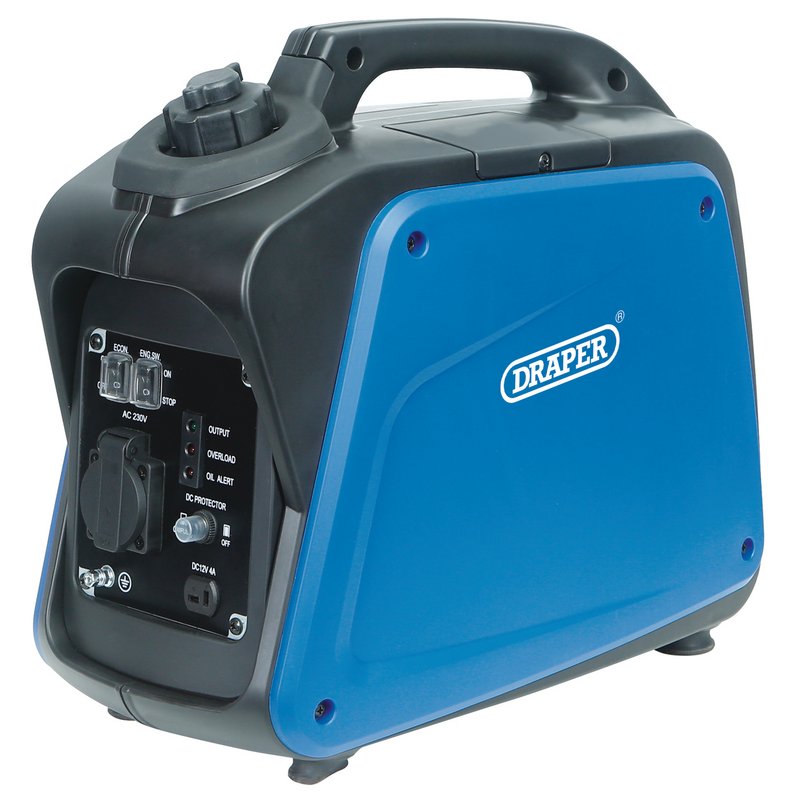
Prime mover. Something must provide the spin. In portable sets this is usually a small petrol or diesel engine; in power stations it could be a steam turbine, a gas turbine, or a water turbine. A governor keeps the speed steady as the electrical load changes.
Rotor (field). The rotating part creates the magnetic field. It may use electromagnets fed by a small DC supply (through slip rings) or permanent magnets. AC machines are called alternators; older DC machines with commutators are dynamos.
Stator (armature). The stationary steel core holds coils of copper. As the rotor’s magnetic field sweeps past, each coil sees a rising and falling flux, which induces AC. Single-phase machines have one main winding; three-phase machines have three windings spaced 120° apart for smoother power and higher capacity.
Excitation and AVR. To control output voltage, many alternators feed a little of their own output back into the rotor via an Automatic Voltage Regulator (AVR). The AVR adjusts the field current to hold the terminal voltage steady as the load changes. Permanent-magnet machines skip this step but can’t regulate as tightly.
Frame, bearings and cooling. A rigid frame supports the assembly; bearings keep the rotor centred. Heat is removed by fans and airflow; larger machines may use liquid cooling. Enclosures range from open frames to weather-resistant, acoustic canopies.
From spin to sockets
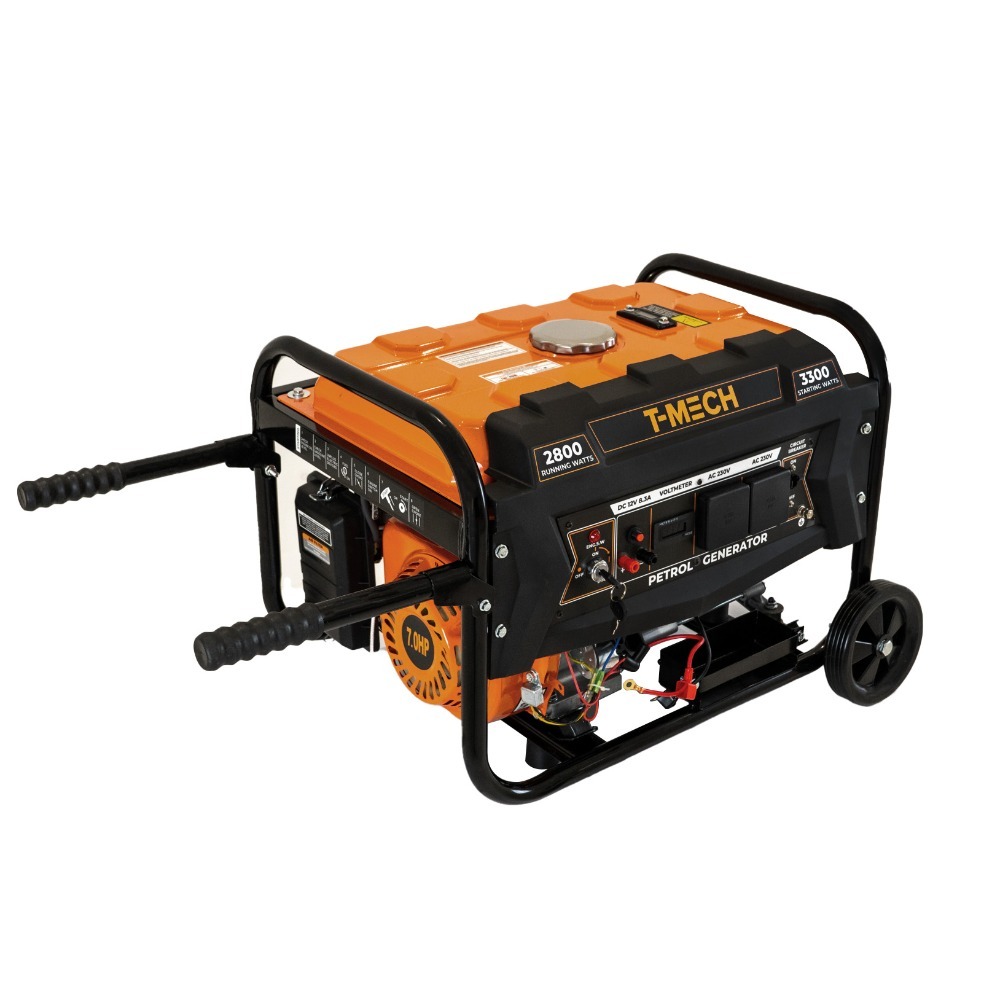
When you start the engine, it accelerates the rotor to a target speed—for example, 3,000 rpm to make 50 Hz in the UK with a two-pole alternator, or 1,500 rpm with a four-pole design. As the magnetic field cuts the stator coils, each coil develops a sinusoidal voltage. In a three-phase generator these voltages are staggered in time, providing higher power density and smoother torque. The AVR trims the field to keep voltage near 230 V line-to-neutral (or 400 V line-to-line for three-phase sets).
Frequency depends on rotor speed and pole count. If the engine bogs down under load, frequency falls, lights may flicker, and motors can run hot. Governors—and, in inverter models, precise electronics—keep speed accurate so appliances behave properly at 50 Hz.
AC, DC and inverter generators
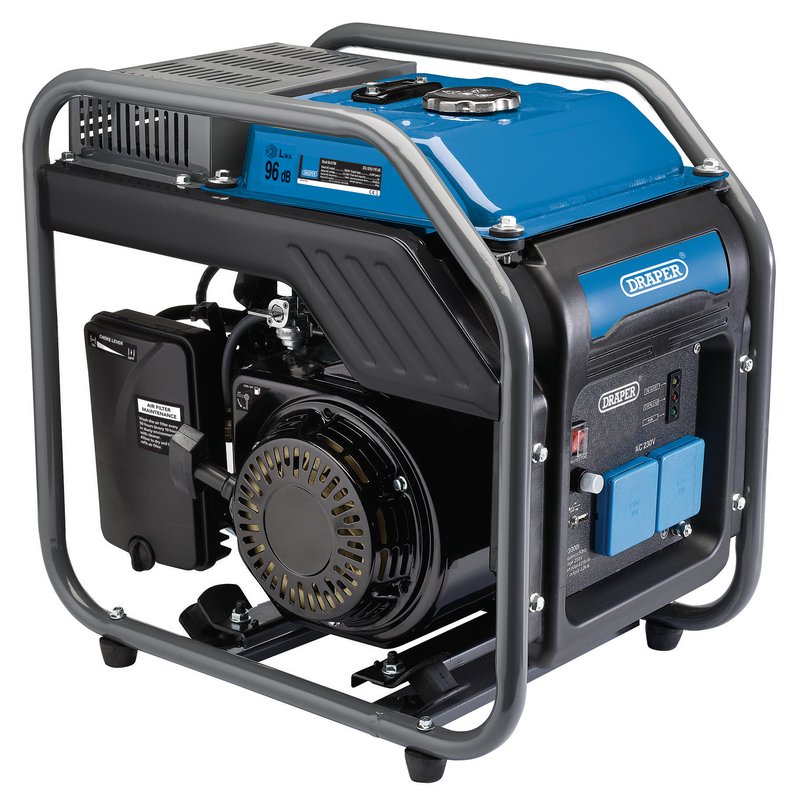
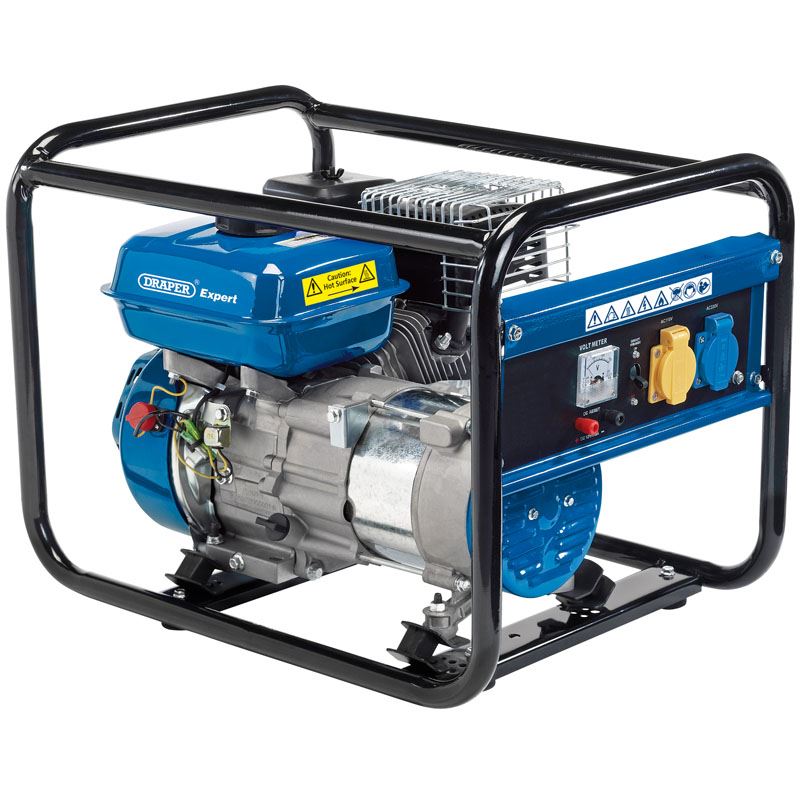
Traditional portable sets produce raw AC straight from the alternator. This is fine for tools, heaters and many appliances if voltage and frequency are stable. Inverter generators take the alternator output, rectify it to DC, then use power electronics to create a very clean 230 V, 50 Hz AC waveform with low total harmonic distortion (THD). Because the engine can vary speed with load, inverter sets are quieter and more fuel-efficient, and they’re kinder to laptops, chargers and audio gear. Some models also provide a low-current 12 V DC outlet for battery charging.
Power, power factor and sizing
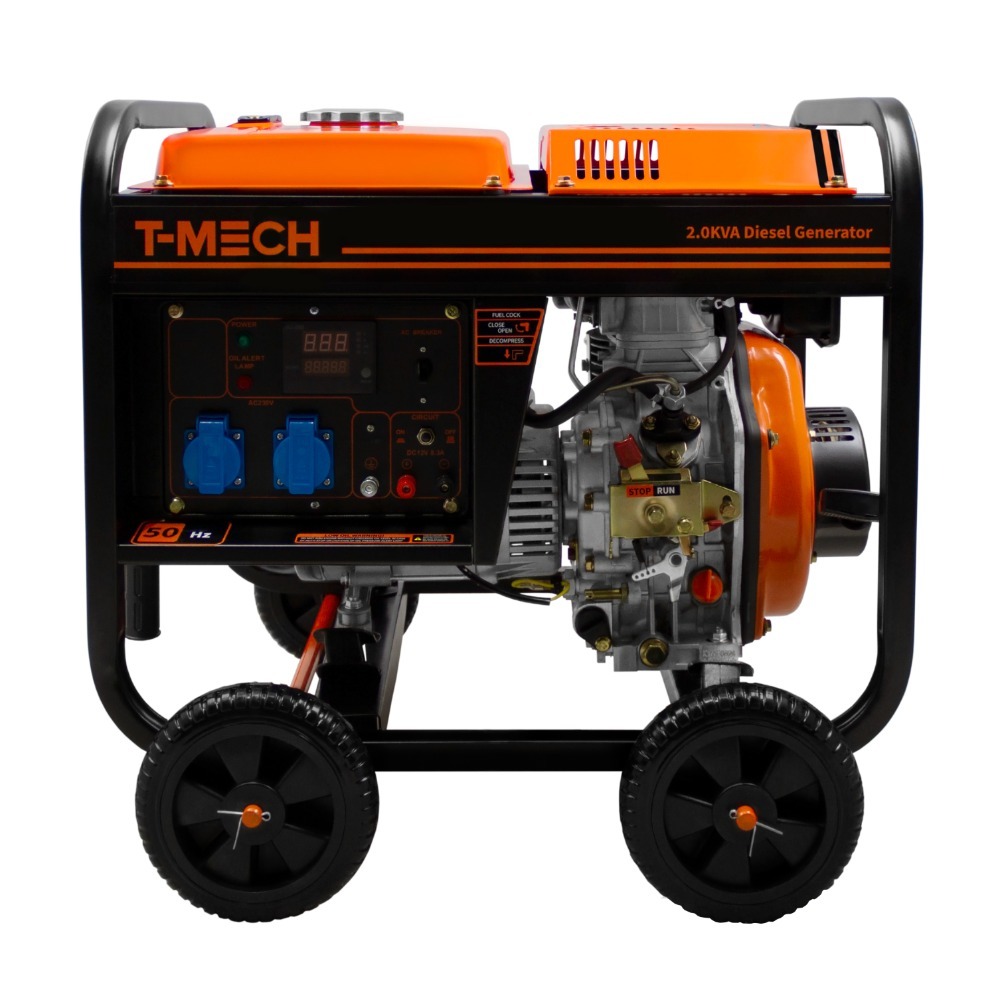
Generators are rated in watts (W) or kilowatts (kW) for real power, and in kVA for apparent power. The link between them is power factor (PF): kW = kVA × PF . Resistive loads such as heaters have PF close to 1. Motors, welders and some switch-mode power supplies have lower PF, so they draw more current for the same useful kW. Starting currents complicate things: a motor may need five to seven times its running current for a split second.
Good practice: list your loads, note any motors or compressors, include their starting surges, and add headroom (typically 20–30%). If you need three-phase power, try to balance the phases so one winding isn’t overloaded while others are idling.
Voltage regulation and protection
The AVR holds the output within a narrow band, but protection devices remain essential. Circuit breakers prevent excessive current. Oil-pressure switches and temperature sensors protect the engine. Many portable sets include residual-current devices (RCDs) on outlets for shock protection. Never defeat earthing arrangements: correct earthing, bonding and RCD use are vital for safety, especially outdoors and on construction sites. If you intend to connect a generator to a building, use a proper changeover switch and follow local wiring regulations.
Fuel, starting and control panels
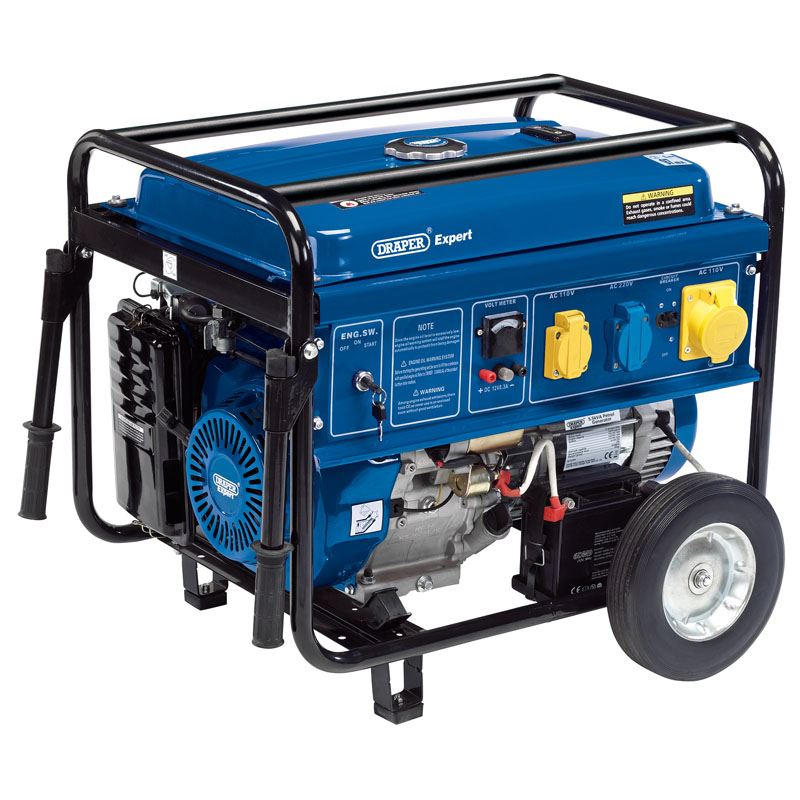
Engines may run on petrol, diesel, LPG or natural gas. Diesel suits heavy, continuous loads and offers strong economy; petrol sets are lighter, cheaper and responsive. Starting can be manual (recoil) or electric; larger standby units start automatically. Control panels typically show voltage, frequency and hours run; better ones also display real-time power and provide individually protected sockets. A standby system often includes an Automatic Transfer Switch (ATS) that senses a mains failure, starts the generator, transfers the load, then restores mains when it returns.
Maintenance and reliability
A generator is half engine, half alternator. Follow engine service intervals for oil, filters and (for petrol) spark plugs. Keep fuel fresh—treat petrol with stabiliser for seasonal kit—and drain water from diesel separators. Keep cooling inlets clear, check belts and mounts, and store the machine dry and ventilated. Exercise standby sets monthly under load so the engine, AVR and battery stay healthy. Loose connections cause heat and voltage drops, so tighten terminals periodically and inspect cables for abrasion or moisture.
Noise, placement and emissions
Sound levels vary widely. Inverter models with acoustic canopies can be whisper-quiet at light load, while open-frame site sets are much louder. Place the unit outdoors, on level ground, away from doors, windows and air intakes. Carbon monoxide is deadly: never run a generator in a garage, shed, awning or tent. Use approved external fuel connections if needed, but always follow the manufacturer’s limits. Store fuel safely and observe local regulations.
Conclusion
Generators aren’t mysterious: they’re disciplined applications of Faraday’s law, turning rotation into reliable electrical power. Inside, a rotor’s magnetic field sweeps past stator coils, while the engine and AVR keep frequency and voltage on target. Choose the right type—conventional or inverter—size it to handle both running and starting loads, and pay attention to earthing and protection. With basic maintenance, good ventilation and safe placement, a generator can provide years of dependable back-up or off-grid power. Understand the physics and the practicalities, and you’ll use one confidently, efficiently and, most importantly, safely.
- Menu
- Fancy Dress
- Electronics & Gaming
- Clothing
- Pet Products
- Garden
- Tools & DIY
- Home & Leisure
- Gifting & Parties
- Toys
- Information
- About Us
- Become a seller
- Affiliate Programme
- Frequently Asked Questions
- Returns and Refunds
- Terms And Conditions
- Privacy Policy
- View our blog
- Featured
- View more
- Customer Care
- [email protected]
- +44 (0) 1702 617821
- ILFD Group Ltd T/A Cazaar®
- Company Number: 07034824